About rural Hertfordshire
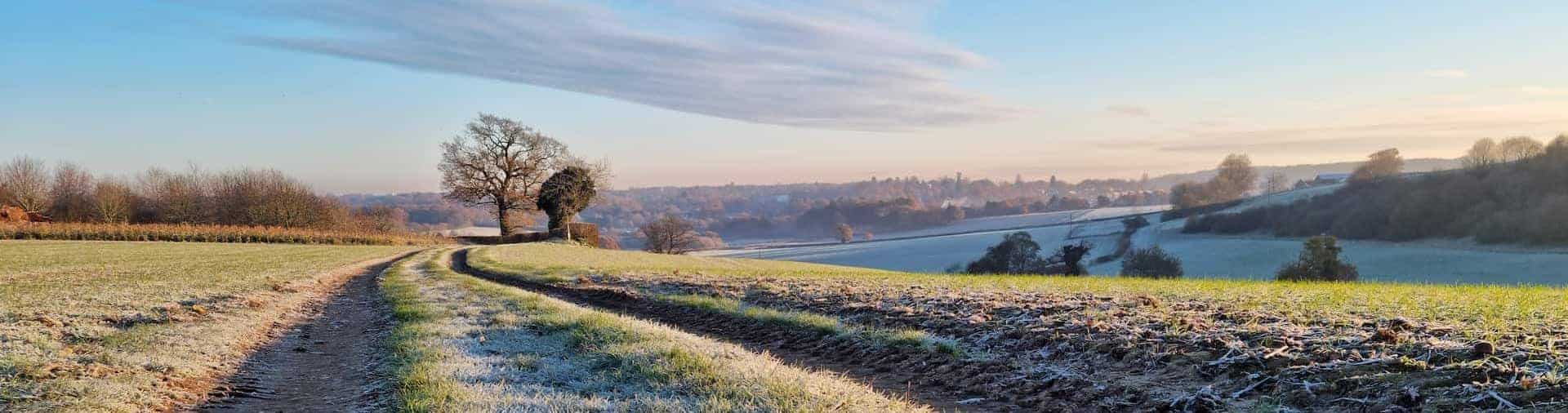
Hertfordshire sits just north of London, yet it remains surprisingly rural — a county of chalk hills, ancient woodlands, and market towns surrounded by active farmland. Despite commuter pressures, much of the countryside is still farmed, managed, and lived in.
The Chilterns cross the western edge of the county, where sheep graze on grassland slopes and beechwoods shade sunken lanes. The east of the county supports more arable farming — fields of wheat, barley, and beans surround villages like Much Hadham, Ashwell, and Braughing.
Hertfordshire’s traditional farmsteads — timber barns, flint walls, and tiled roofs — still punctuate the landscape, and many now host diversified businesses like farm shops, glamping sites, or conservation schemes.
Local food production remains strong, and rural schools, horse shows, and agricultural societies support a continuing rural culture even near the capital.
Hertfordshire’s countryside may be under pressure, but it endures — still farmed, still loved, and still very much alive.
The flag or crest

Region
East of England
Population
1196000
County town
Hertford
Other notable towns / cities
Watford, St Albans
Known for
Commuter belt