Okay, so the word itself might be French. And the original recipe is probably Portuguese. And no one has yet given a convincing explanation of why citrus fruit gets its own name and can’t just be called jam.
But there’s no doubting that this form of marmalade, rather than the original Portuguese quince paste, is a food which is as British as black pudding or fruit scones. And there’s nothing to beat it on hot toast, whether sitting outside on a summer’s morning, or wrapped up warm against the beating rain on a winter’s morning.
And then, of course, there’s the making of marmalade cocktails….
This recipe is worth every bit of the effort, even if your hand will ache after all the cutting of the peel. And if you want a more luxurious version, you can always stir in some whisky at the end, whilst the marmalade is still warm.
What you'll need
1 kg Seville Oranges
2 kg Granulated sugar
2 litres Water
1 Lemon
About this recipe…
Region: Scotland
Vegan? Yes
Vegetarian? Yes
Prep time: 14 hours and 30 mins
Cooking time: 1 hour and 40 mins
Method
Wash the oranges thoroughly, then put in a large jam pan with the water. Use twice the weight of oranges – so 1 kilo of oranges requires 2 litres of water. Boil for 30 minutes.
Remove the oranges from the pan – retaining the water. Once they're cooled, cut them in half and scoop out the pulp and seeds, and put this into a muslin bag. Tie the bag closed.
Slice the orange skins to taste. I'm very happy with a coarse marmalade, which is good as hand-cramp can follow a lot of slicing…
Add the sliced peel, plus the muslin bag back into the water, and bring it to the boil. Turn the heat down and simmer for 40 minutes.
Turn the heat off, and when it's cool enough to do so, remove the muslin bag from the water. Take the pulp out of the bag, and press it into a fine sieve to remove the remaining juice, adding the juice to the pan of peel and water.
Add the sugar to the pan, and heat over a medium heat, stirring to dissolve the sugar. Once the sugar has dissolved, turn off the heat, and leave the pan for several hours – ideally overnight – for the peel to soften.
Sterilise your jam jars. To do this, wash them thoroughly – ideally in a dishwasher – and then put them in an oven at 140°C for 20 minutes. You should do this shortly before you need the jars so that contaminants don't have time to get into the jars after they've been sterilised.
The next day, bring the pan to the boil slowly. Once the pan starts to bubble, put a small plate into the freezer so that you can test for when the marmalade is at the setting point.
Boil the marmalade for approximately 20 minutes, or until a jam thermometer shows 104° C. Put a small amount of the liquid onto your cold plate, and put it back in the fridge to cool. When it's cool, if you push a finger into the marmalade, it should wrinkle, and not return to its original shape. At this point, the marmalade is done.
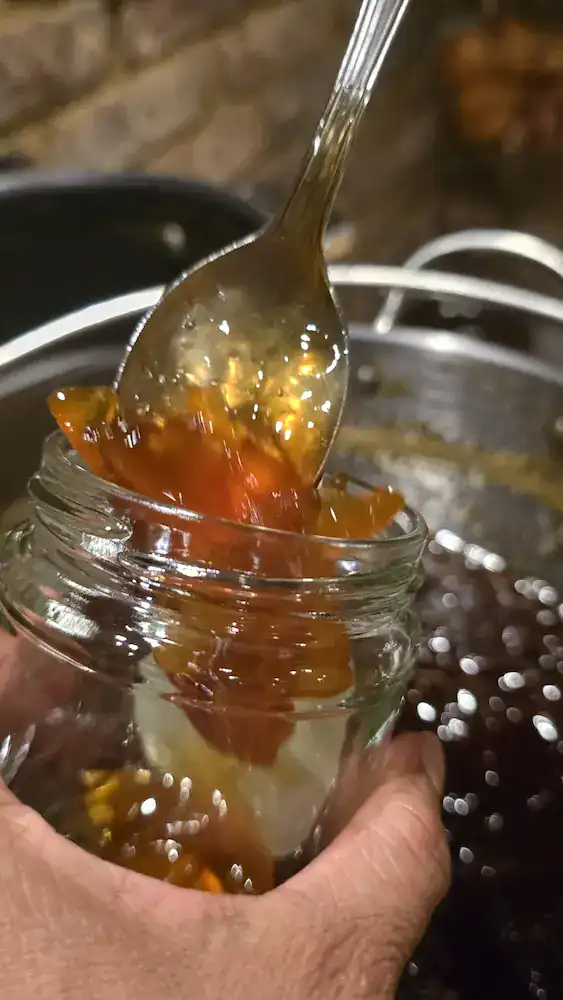
Wait for the marmalade to cool slightly before adding whiskey if you're planning to do this. Once the pan is cool enough that you can hold it, decant the marmalade into the sterilised jars, put the lids on and wipe clean.
The husks of the oranges, having been boiled and had the pulp removed
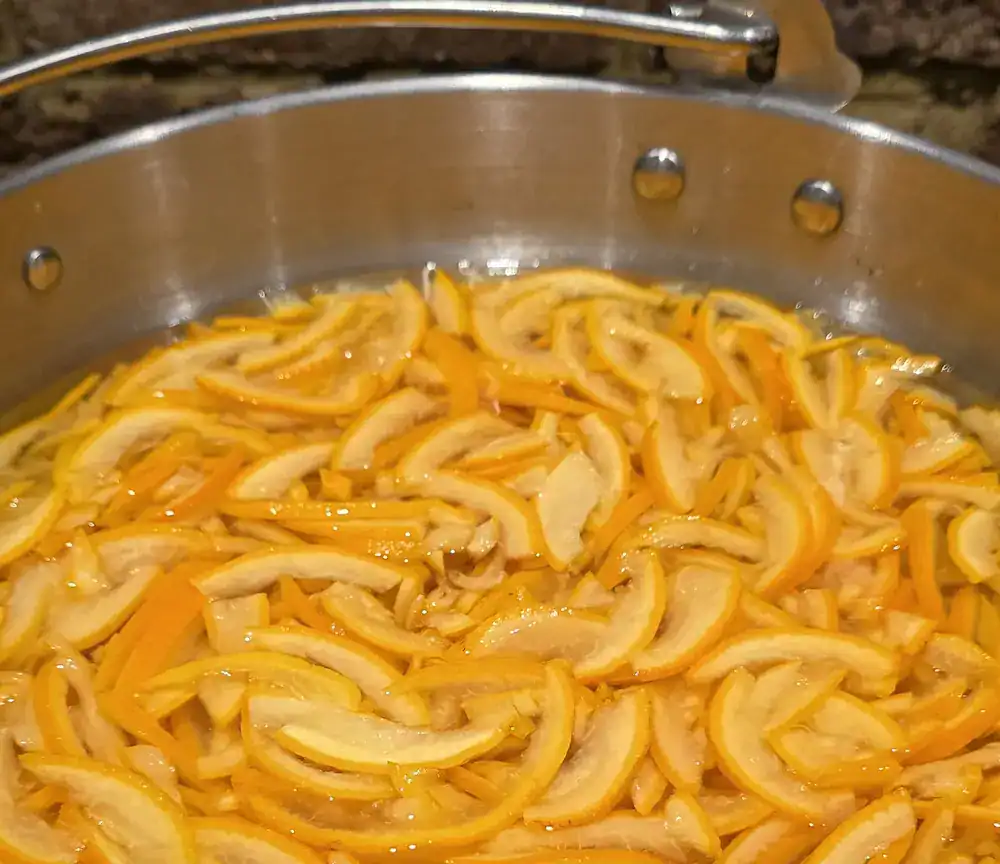
The orange peel, now cut into slices ready for making into marmalade.
The orange peel is a vivid…. err…. orange, once it's cut up, ready to be boiled in the sugared water.
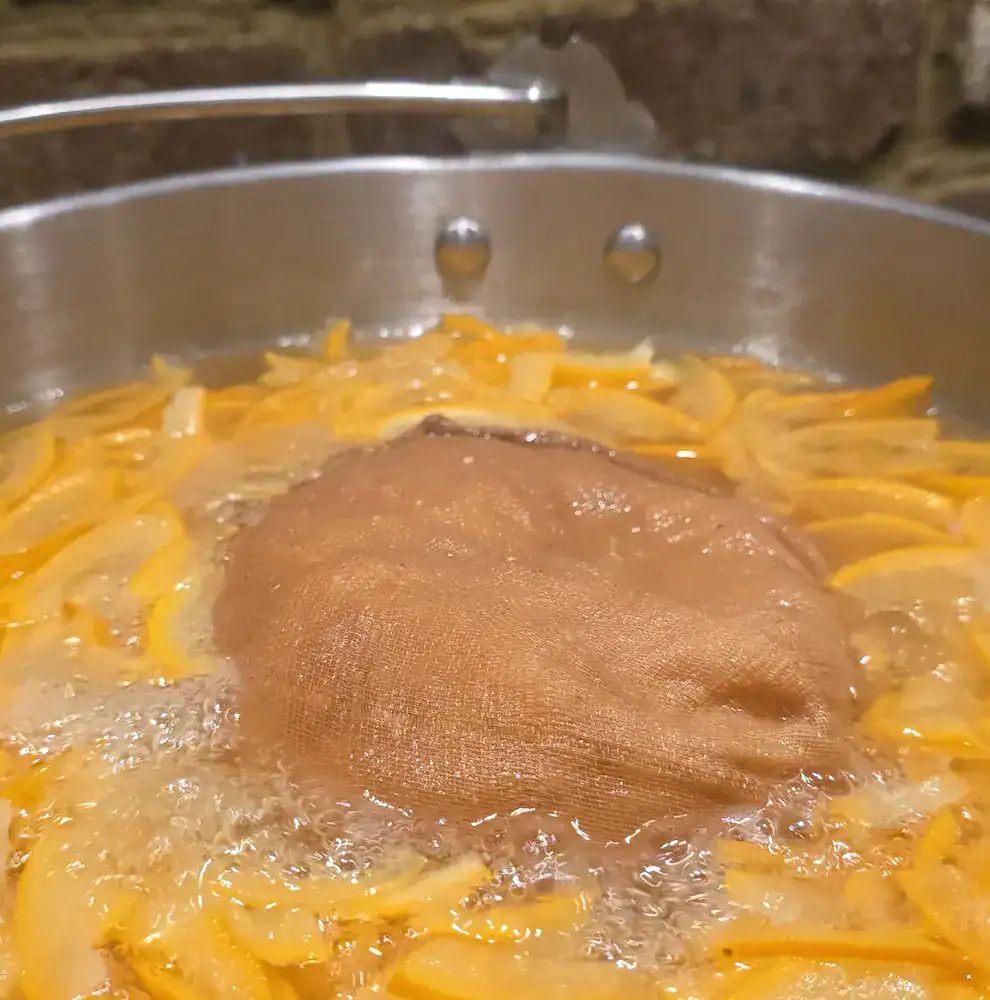
The pan of orange peel, boiling in water, with the muslin bag of pulp floating in the middle
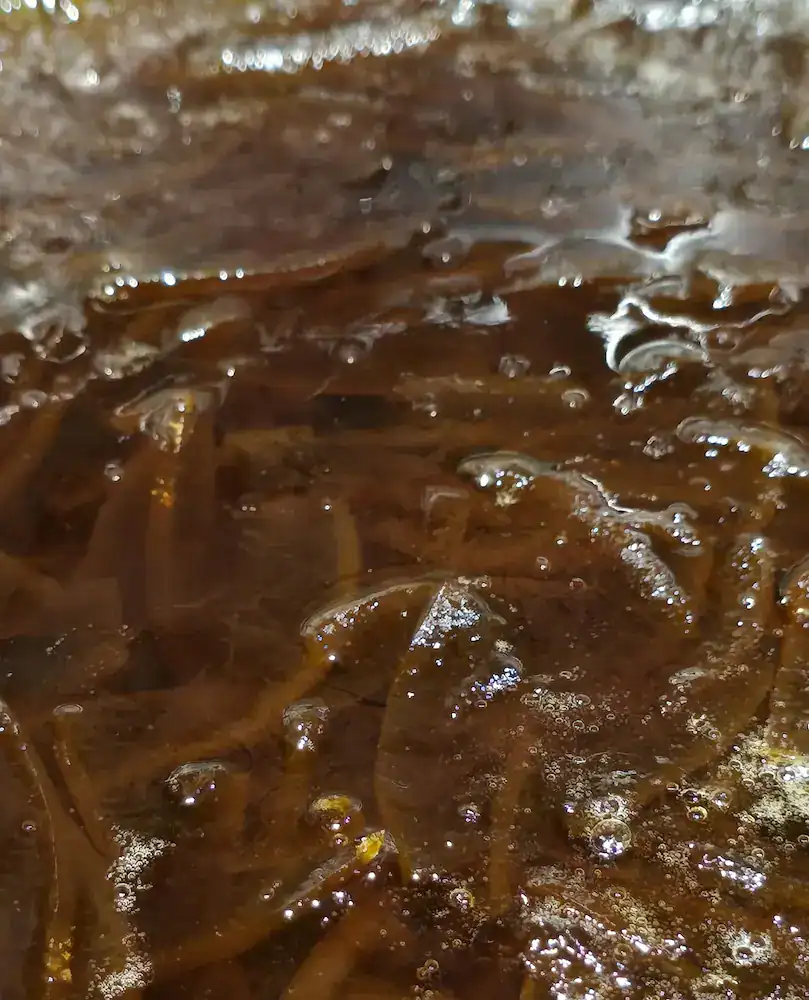
The marmalade has thickened and darkened in the pan, ready and just needs to cool before bottling.
Spooning the warm marmalade into the sterilised jars is a sticky job, but other than labelling, that's about job done!
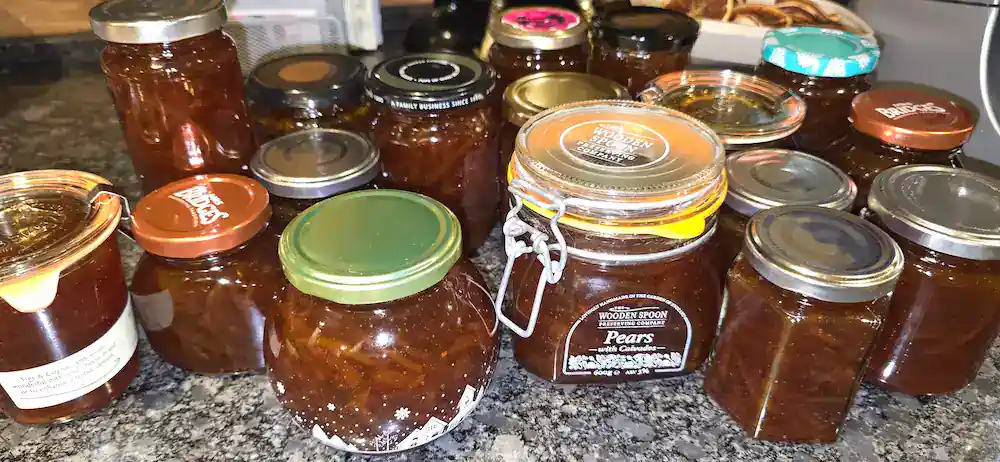
Jars of marmalade – an eclectic collection of jars, but the contents taste amazing!
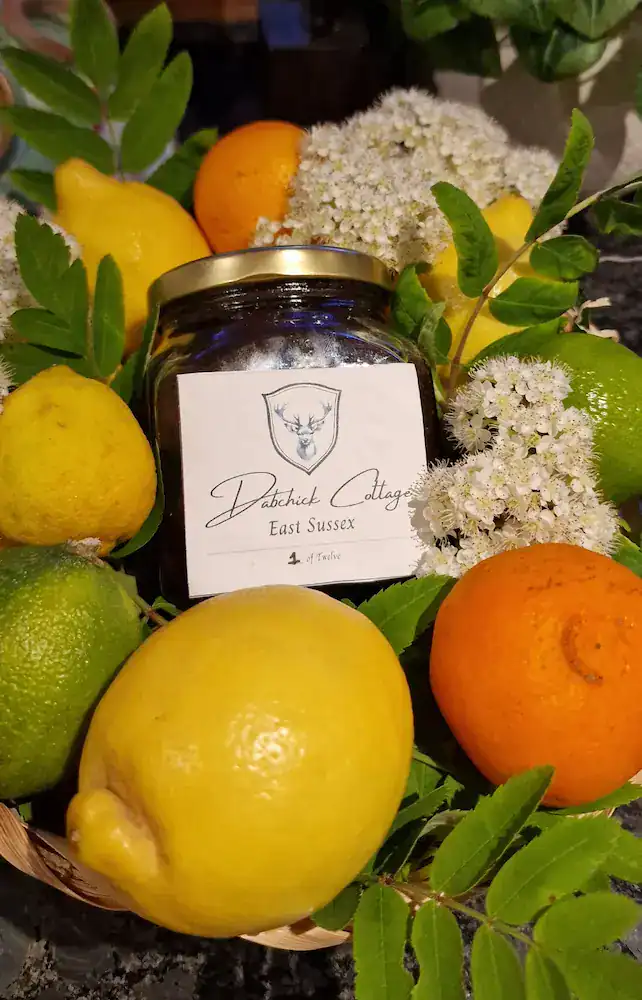
The final product – ready as a gift basket, or just to enjoy at home.