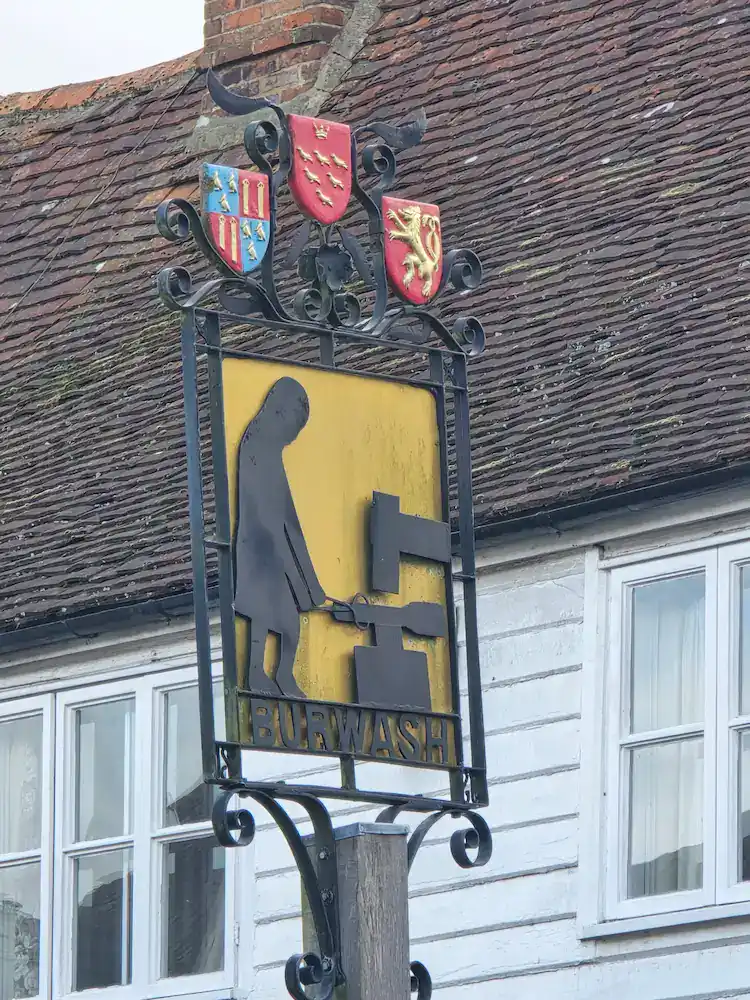
Park either on the High Street, or if there’s no space, then at the car park by the Bear Inn. If you’ve parked in the car park, head back along the road, past the Bear Inn (on your right) until you come to the statue of Rudyard Kipling on a bench – this is the “official” start point of our walk. From the statue, walk (back) along the High Street, passing by the first signed footpath, towards the Bear Inn. Turn into the car park and in the back left corner, to the left of the Scouts’ Hut is the entrance to the footpath, between 2 wooden fences. On the day when I most recently did this walk, there was a murmuration of starlings in the tree just here, making an absolute cacophony of noise!
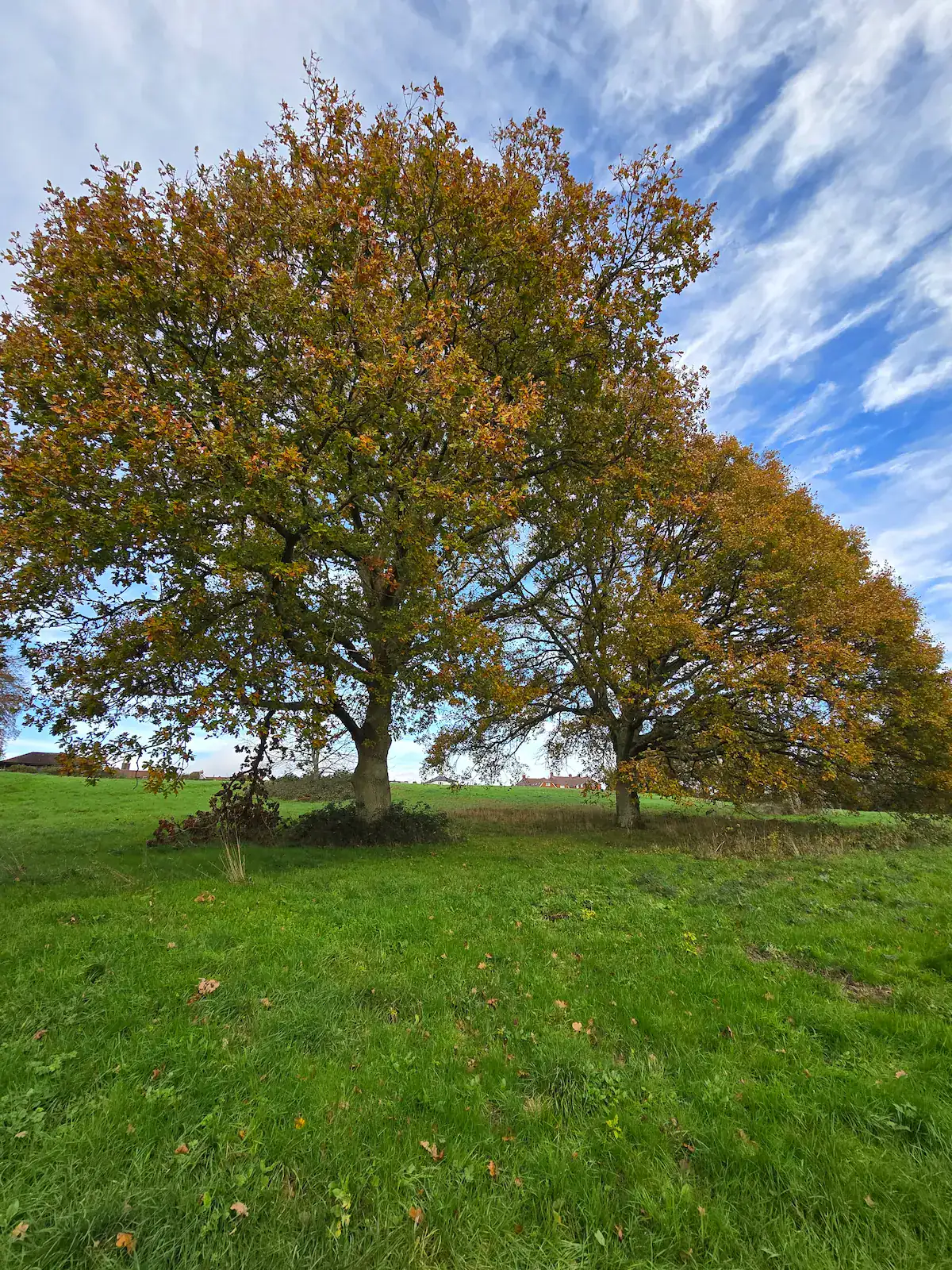
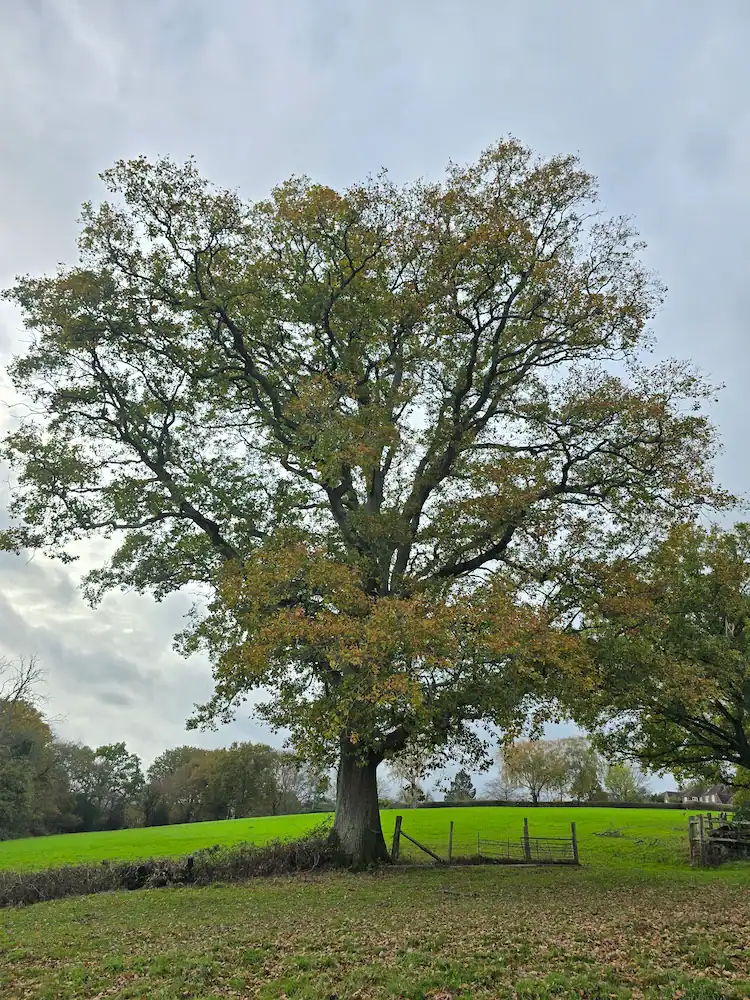
Walk down the right hand side of the field, dropping down past the two large oak trees in the middle, keeping the hedge to your right, and ignoring the path which heads off to the right and over a wooden bridge. At the bottom of the field the two hedges come together to form a point and the path heads off in front of you. Be warned that it can be muddy here, so take care, and perhaps start thinking that you should have worn those wellies that I recommended…. Anyway, the path is signed here (and all along the way) so just take care as you go.
Follow the path straight ahead of you that climbs up the bank again, rather than the one which bears around to the left. The path continues between two dense banks of brambles – this is a great for place for blackberrying in the late summer. After about 30 metres the path opens out into a pleasant, lightly wooded area; keep following the path through this copse and then up into another field.
Walk around the edge of this field, keeping close to the hedge on your right. Where the hedge turns sharply to the left and you see the farm buildings of Dudwell Farm behind the tree line in front of you, take the path out of the corner of the field and cross over a wooden bridge, then over a stile. The path takes you in short order to the corner of the next field (keeping the hedge to your left).
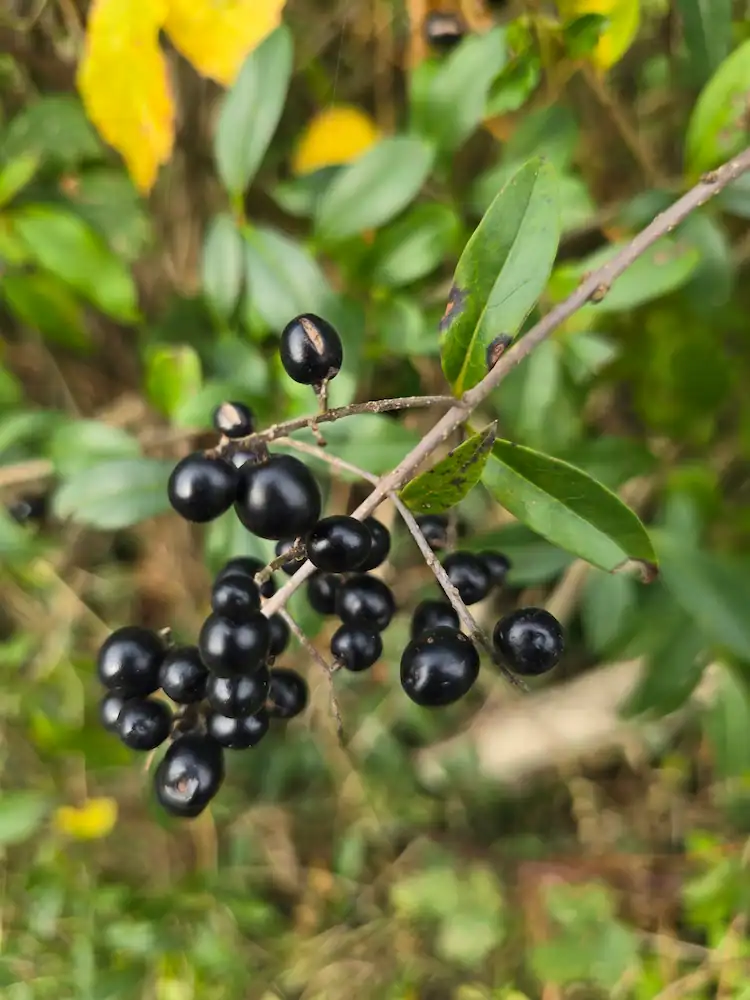
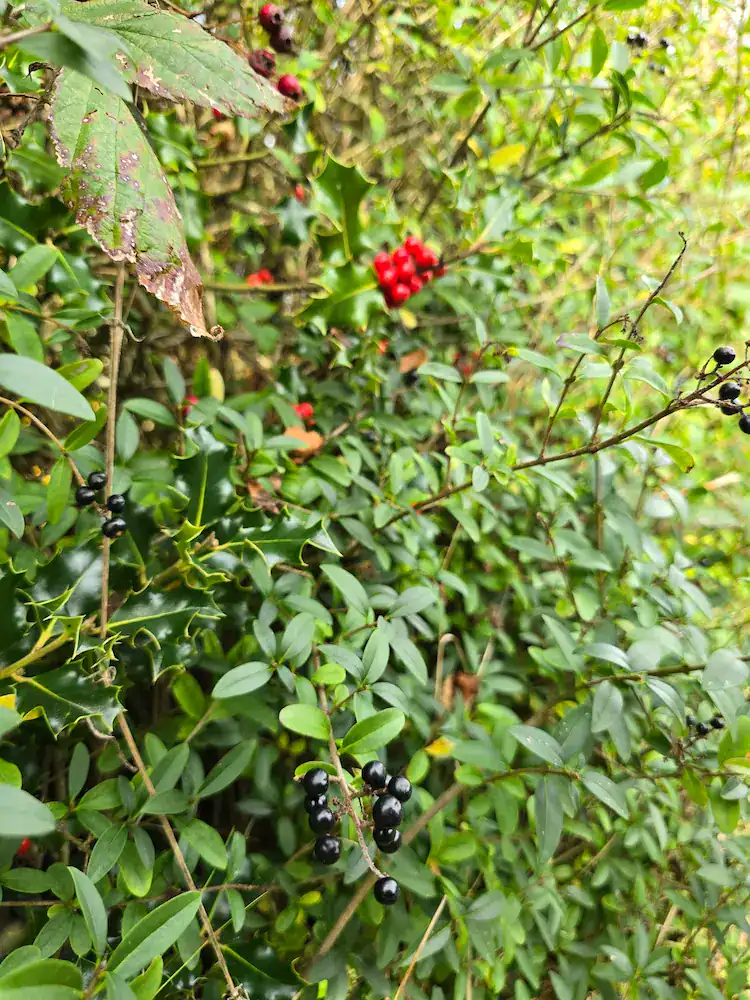
Go through the metal gate in the corner of the field to come out on a small lane where you’ll turn right. After about 200 metres you’ll see a line of tall chimney pots peeking over the hedges – this is your first glimpse of Rudyard Kipling’s home. The lane continues between privet and holly-studded hedges replete with black and red berries in the autumn, until you come up on Bateman’s – the country pile which was the writer’s last home. The house is owned (as is much of the land you’re going to be walking on) by the National Trust, and it’s really worth a visit, with many of the rooms preserved with Kipling’s belongings to give you a real sense of the man and his time.
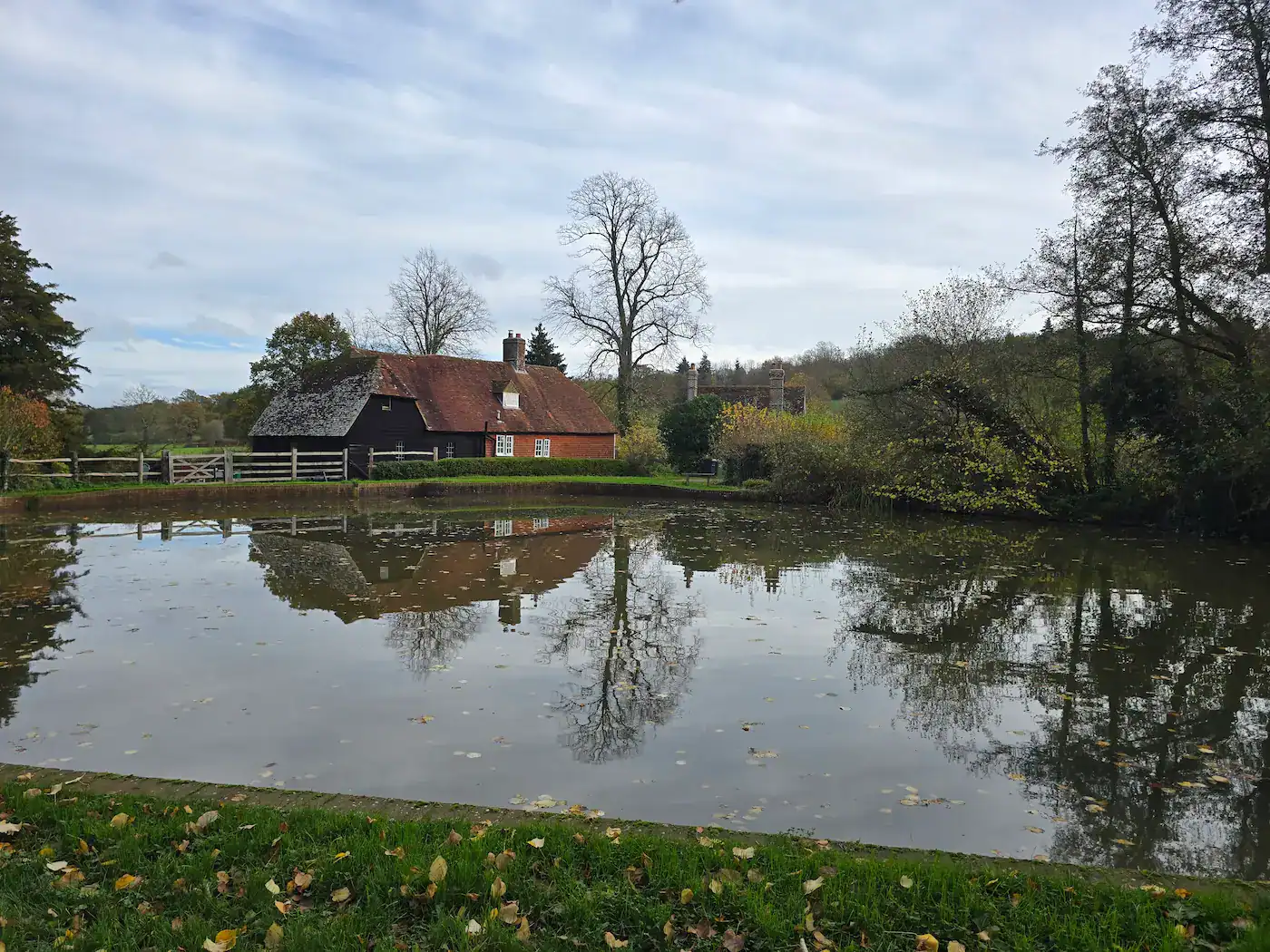
Turn left in front of Batemans to follow the road (it’s marked as a private road, but walking is permitted) around the estate keeping the hedges on your right. Just after a group of houses, including a brick oast house and a white-painted timber cottage, the path turns off to the right to go behind these houses and around the edge of a picturesque pond. For this part of the walk, the path is well maintained, with a good surface. Make the most of it – there’s another muddy patch coming shortly, and then it’s back into the fields…
After a couple hundred metres the path crosses a stream by a sluice gate to your left and shortly afterwards, after entering a lightly wooded area where it gets muddy again (I warned you) it turns to the right – crossing a wooden bridge into a field. Cross the field aiming for the gap in the corner straight ahead of you. This is the start of the climb back towards the village, so take it steady as you go and catch your breath.
When you get to the corner of the field, head through the metal gate to the right, and walk across the middle of the next field, up the slope towards a gap in the hedge. There a blue footpath marker in the middle of the field to point you in the right direction.
Head straight across the next field too, towards a collection of oak trees (not towards the single oak tree to the right) and go through the small metal gate, over the two wooden bridges and through a second gate. After the second gate, as you enter the field, follow the bramble hedge to your left for about 30 metres and exit the field through two more metal gates.
Follow the edge of the field with the boundary to your left as it heads up, toward a large brick and tile constructed house, walking under the spreading branches of several more beautiful oak trees. Just past the house, in the corner of the field is a metal kissing gate – go through the gate and down the steps to the main road, turning right to continue back into Burwash where you started. Be careful – the road can be busy, with fast traffic, and as you join it, the pavement is narrow.
If you still have the time and energy, head around 50 metres past the statue of Kipling where the walk started. At the junction of the High Street and School hill sits a war memorial. Most villages, of course, will have a memorial to those lost in the first and second world wars – but this one is unusual in that it features a lamp, which is lit on each anniversary of the death of a local person during these wars. Kipling himself inaugurated this memorial in 1920.