About rural Western Isles
Na h-Eileanan Siar — also known as the Western Isles — is a place where rural life takes on a different scale, shaped as much by sea and sky as by land. Stretching over 100 miles from Lewis in the north to Barra in the south, this island chain off Scotland’s west coast is a tapestry of crofting townships, peat moors, rugged hills, and windswept Atlantic shores. With no cities and only a handful of towns, the Western Isles are among the most deeply rural and culturally distinct areas in Britain.
Crofting is at the heart of the region’s identity. These small, individually worked landholdings, often passed through generations, form the backbone of a landscape defined by strip fields, sheep pens, and old stone byres. While crofting is rarely a full-time occupation today, it continues to provide food, tradition, and a strong connection to place for many islanders. Cattle and sheep are commonly raised here, often on common grazings, and many communities participate in cooperative land management.
The Isles are also a stronghold for the Gaelic language and culture. Place names, signage, and everyday conversation reflect a heritage deeply tied to land and tradition. Rural schools teach in Gaelic, and community halls host ceilidhs, storytelling, and island games that keep these cultural threads alive.
Nature is ever-present: the machair — a rare, fertile coastal grassland — blooms each summer with wildflowers, while seabirds, otters, and even corncrakes shelter along the coasts. Fishing, seaweed harvesting, and increasingly, renewable energy (notably wind and wave power), all play growing roles in the rural economy.
Na h-Eileanan Siar is not just rural in geography — it’s rural in spirit, where the elements, the land, and the community remain in delicate and enduring balance.
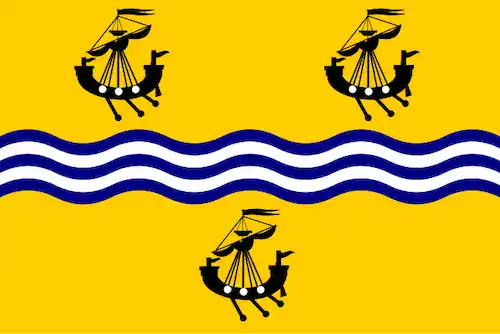
The flag or crest
Region
Northern Scotland
Population
27000
County town
Stornoway
Other notable towns / cities
Tarbert, Balivanich
Known for
Islands, Gaelic Culture